NAD+ for Women Over 40: The Anti-Ageing Therapy You Need to Know About
There is a moment in many women's lives — often in their late 30s or early 40s — when something changes, quietly yet noticeably. The energy that once came naturally suddenly needs looking after. Recovery takes longer. Skin loses its firmness. Mental sharpness feels less reliable. Sleep becomes lighter and more broken.
Most women are given the same answer: it's age, it's hormones, it's inevitable. But there is another biological process playing a crucial role — one that is rarely mentioned: the accelerated decline of NAD+.
The link between the menopause and NAD+
Oestrogen plays a direct role in regulating NAMPT — the rate-limiting enzyme in NAD+ biosynthesis. As oestrogen levels fall during perimenopause, NAMPT activity drops — accelerating NAD+ decline beyond normal ageing. Research suggests that women at this stage of life may experience a steeper and faster fall in NAD+ than men of the same age.
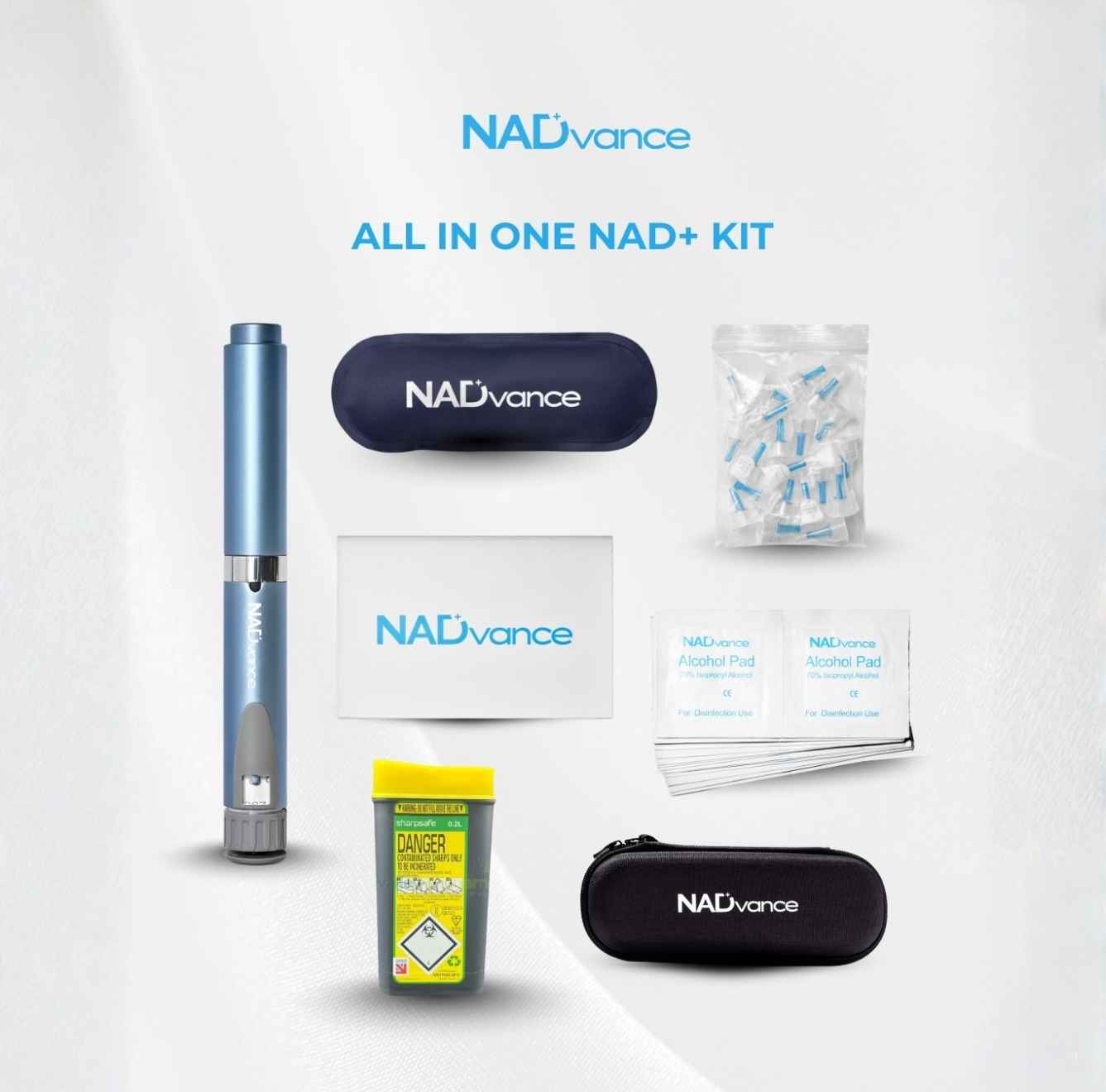
On top of this, with ageing and the immune changes of the menopause, the NAD+-consuming enzyme CD38 becomes increasingly active. Your NAD+ reserves are therefore depleted faster — precisely when you need them most. You can find out more about the NADvance Pen delivery system and the science behind it on our NAD+ Pen product page.
How NAD+ deficiency shows up during the menopause
Persistent fatigue is the first and most consistent sign. Mitochondria produce less ATP when NAD+ falls — and you feel it both physically and mentally. Brain fog and cognitive changes often follow soon after. Neurons with less energy mean poorer concentration, slower thinking and words that simply won't come.
Sleep changes too: NAD+ regulates the body's molecular daily rhythm via SIRT1 — without enough NAD+, sleep loses its depth and restorative value. Skin changes occur because the sirtuins activated by NAD+ directly regulate collagen production in fibroblasts and protection against oxidative stress. And metabolic changes — shifts in body composition and insulin sensitivity — are partly down to the decline of the NAD+-dependent sirtuins SIRT1 and SIRT3.
What NAD+ therapy actually does
Restoring NAD+ to therapeutic levels improves mitochondrial ATP production — and the deep exhaustion many women know from the menopause often eases considerably. This is the most frequently reported benefit among women using NADvance.
Cognitive clarity improves because neuronal energy production becomes more efficient again and the SIRT1 neuroprotection system is reactivated. Skin quality benefits from improved DNA repair in skin cells and higher sirtuin activity, which reduces inflammation and supports fibroblasts.
The metabolic benefits come from reactivating the NAD+-dependent sirtuin pathways that influence insulin sensitivity, fat metabolism and mitochondrial efficiency — areas that come under particular pressure during the menopause.
Is NAD+ therapy the same as HRT?
No — but the two aren't mutually exclusive either. Hormone replacement therapy (HRT) directly addresses the hormonal component of the menopause. NAD+ therapy addresses the cellular energy and repair component. Many women combine both approaches with very positive results. Have questions about combining NAD+ therapy with HRT or other treatments? Our FAQ page has detailed answers to the most common medical questions.
Conclusion
For women over 40, NAD+ therapy addresses one of the most fundamental — and most overlooked — aspects of the ageing process. Restoring cellular energy, supporting DNA repair, activating longevity pathways and strengthening metabolism: this is an evidence-based strategy, not wellness marketing.
Read our step-by-step instructions before you begin — and when you're ready, order the NADvance Pen and start your protocol.