NAD+ for Athletes: How Subcutaneous Therapy Speeds Up Recovery and Improves Performance
Every serious athlete — whether a professional or someone who trains consistently towards personal goals — is looking for the same things: faster recovery, better performance and the ability to train consistently without being constantly held back by fatigue or injury.
Much of what determines your ability to reach these goals doesn't happen in the gym. It happens in your cells. And one of the most critical molecules for athletic recovery and performance — one that most training programmes never mention — is NAD+.
The cellular basis of performance
During exercise, your muscles demand enormous amounts of ATP — the cellular energy currency that powers every single muscle contraction. The mitochondria in your muscle cells are responsible for producing this ATP. And they can't do it without NAD+.
When NAD+ levels are optimal, your mitochondria work efficiently, ATP is produced at the rate your muscles need, and you feel energetic, capable and able to sustain the effort. When NAD+ becomes depleted — as it naturally does after your thirties and in anyone under heavy training stress — mitochondrial efficiency drops, energy production weakens and physical performance suffers directly. All the science behind the NADvance delivery system can be found on our product page.
How NAD+ supports recovery
During intense exercise, micro-tears form in the muscle fibres. This damage is intentional — it's what triggers the repair and strengthening process that builds muscle. But the repair itself requires cellular energy and active DNA repair processes, both of which depend on NAD+.
Higher NAD+ levels mean faster activation of the PARP enzymes responsible for detecting and repairing cellular damage. Shorter recovery windows. The ability to train more often and at higher volume without tipping into overtraining.
The NAD+-dependent sirtuins, particularly SIRT1 and SIRT3, play a key role in resolving inflammatory signals and returning muscle tissue to a state of balance after training stress. Athletes with higher NAD+ levels have a more efficient inflammation-resolution system — less lingering soreness, a quicker return to baseline and greater resilience to injury over the course of the season.
One of the most powerful long-term training adaptations is increased mitochondrial density — more mitochondria per muscle cell means greater capacity for aerobic energy production. This process is regulated in part by the NAD+-dependent sirtuins and their link to PGC-1α, the master regulator of new mitochondria formation. Maintaining high NAD+ levels during a training block may therefore not only support immediate recovery, but also enhance the very physiological adaptations your training is designed to produce.
What athletes report
DOMS — the classic delayed-onset muscle soreness — is noticeably reduced, especially after the first couple of weeks of the protocol. Many athletes report going from 2–3 days of significant soreness to less than 24 hours of mild stiffness after comparable training sessions.
Training frequency improves, because when recovery is faster you can train more consistently. Many athletes using NADvance report being able to increase their training volume without the build-up of chronic fatigue that previously held them back.
The energy slump many athletes experience midway through a hard preparation block — when accumulated fatigue starts to compound — is significantly less pronounced with consistent NAD+ supplementation. And improved mental clarity translates directly into training quality: better technique, quicker decisions during high-intensity efforts and a stronger mind-muscle connection during technical work.
For any questions about dosing during intense training blocks or competition periods, our FAQ section has detailed, practical answers.
How to fit NADvance into your programme
The NADvance maintenance protocol — one injection every other day — is easy to fit into any training programme. Many athletes choose to inject in the morning on training days or on rest days. There are no specific timing requirements in relation to training: consistency with the protocol over time is what drives results, not the exact moment of injection relative to your session.
Conclusion
Athletic performance and recovery are cellular processes. Give your mitochondria, repair enzymes and longevity proteins the molecule they need — and the results follow logically.
NAD+ therapy by subcutaneous injection is not a doping drug and it is not a shortcut. It is a cellular restoration tool — one that gives your body the biochemical substrate to perform and recover at the level your training truly deserves.
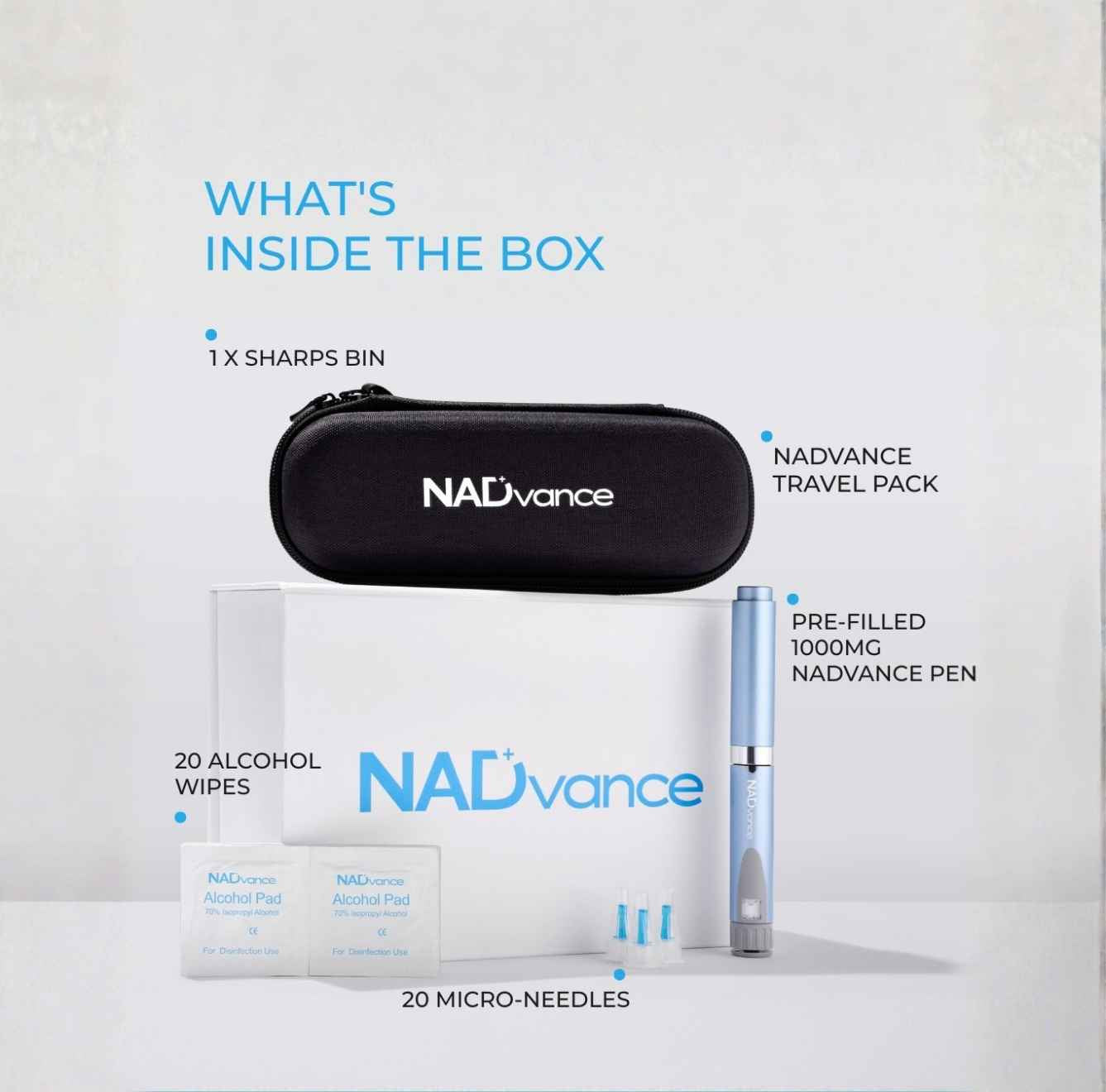
Before you start, read our complete instructions guide to make sure you follow the protocol correctly. Then order the NADvance pen and start building performance from within.